How to Read Sheet Music 1
Staff, clefs, note values, rests and time signatures.
May 24, 2026
1. The Staff
Sheet music can look complicated at first, but it is simply a written language for music. Once you understand the basic signs, you can begin to see how pitch, rhythm, timing and expression are shown on the page.This guide introduces the main ideas step by step. It is aimed at beginners who want to understand notation, follow a melody, use a piano keyboard, or join in more confidently with other musicians.
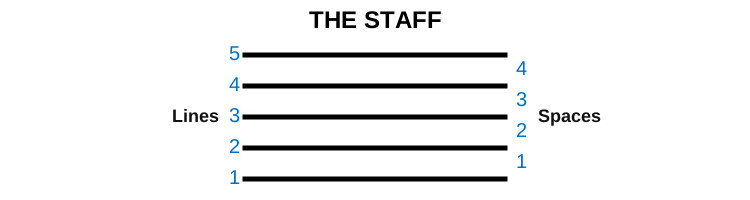
Music is usually written on a staff made up of five horizontal lines and four spaces. Each line and space represents a different note. Notes move alphabetically from A to G, then repeat again.
Basic idea: the higher a note appears on the staff, the higher it sounds.
2. Treble Clef
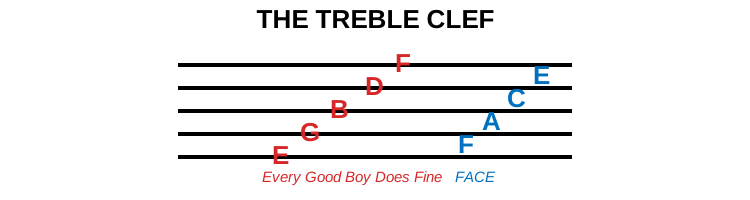
The treble clef is used for higher notes. Many instruments use it, including flute, violin, guitar, trumpet and the right hand of piano music.A common way to remember the treble clef lines is:
E G B D F: Every Good Boy Deserves Football
The spaces spell:
F A C E
3. Bass Clef
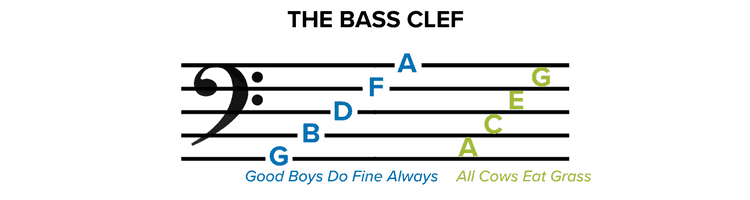
The bass clef is used for lower notes. It is common in music for bass guitar, cello, tuba, trombone and the left hand of piano music.A common way to remember the bass clef lines is:
G B D F A: Good Boys Deserve Football Always
The bass clef spaces are:
A C E G: All Cows Eat Grass
4. Notes and Note Values
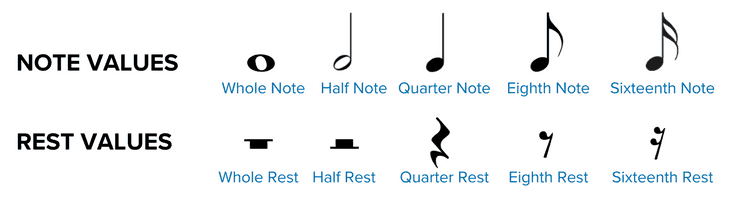
A written note tells you two things: which pitch to play and how long to hold it for. The position of the note head gives the pitch. The shape of the note gives the length.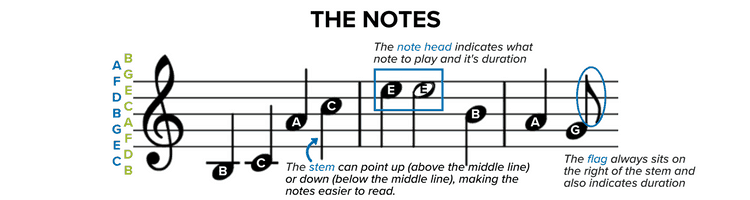
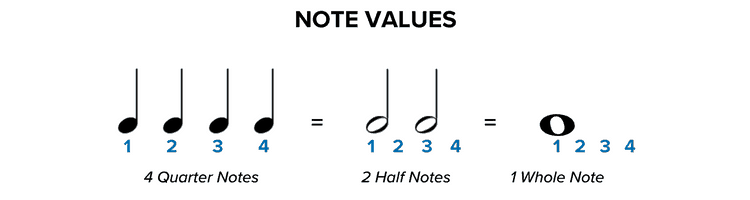
Common Note Values
Whole note: 4 beatsHalf note: 2 beats
Quarter note: 1 beat
Eighth note: half a beat
Sixteenth note: a quarter of a beat
Dots and Ties
Dots and ties can make notes last longer. A dot adds half the value of the note again. A tie joins two notes together so they are held as one continuous sound.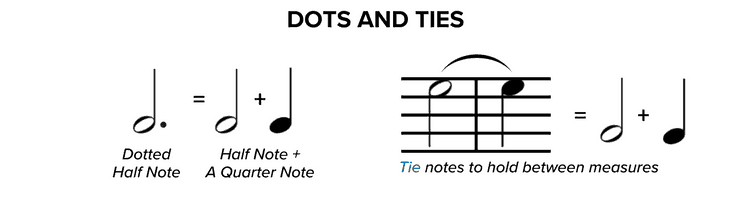
Beamed Notes
Shorter notes are often joined together with beams. This makes rhythms easier to read because you can see how the notes fit inside each beat or bar.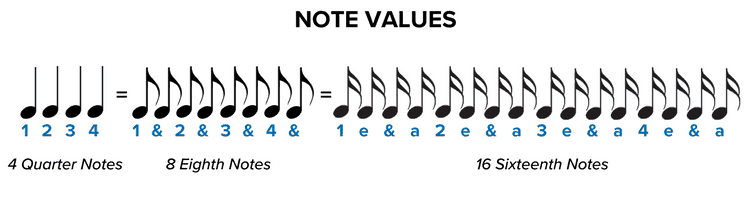
5. Rests
Music also needs silence. A rest tells you not to play for a set amount of time. Like notes, rests have different shapes depending on how long the silence should last.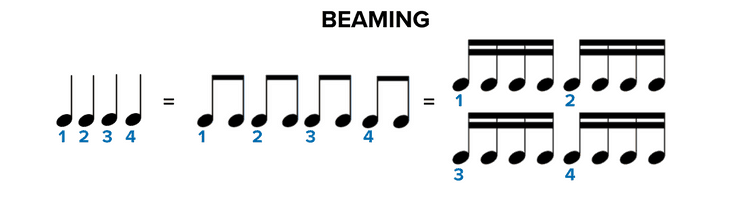
6. Time Signatures
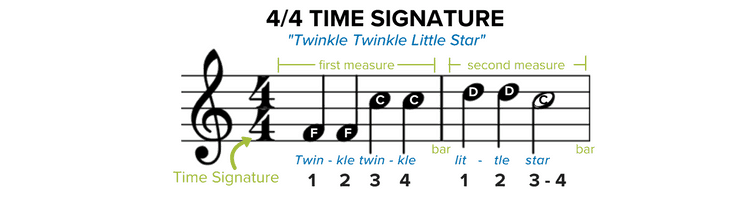
A time signature appears near the beginning of a piece. It tells you how the beats are grouped.In 4/4, there are four beats in each bar. This is one of the most common time signatures in popular music.
3/4 Time
In 3/4, there are three beats in each bar. This often gives music a waltz-like feel.Once you can recognise the staff, clefs, note values, rests and time signatures, you have the basic map for reading simple music. Part 2 continues with tempo, scales, whole steps, half steps, sharps, flats, naturals and key signatures.